Franco Bellini
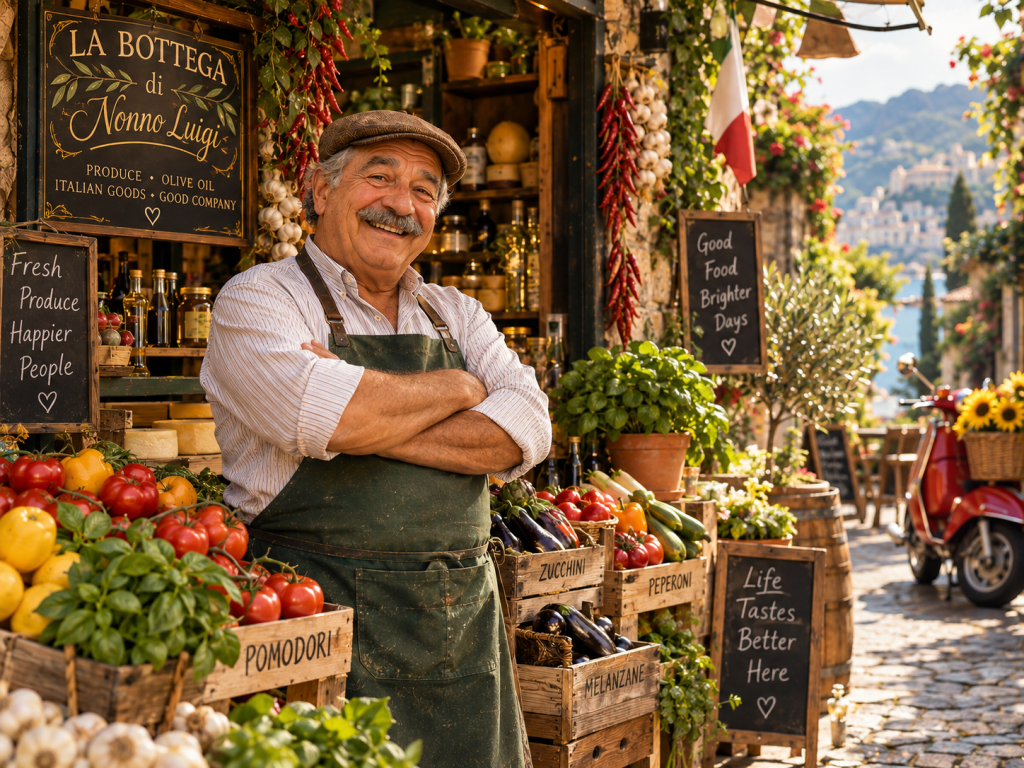
Franco Bellini had opened his little corner market before dawn almost every morning for the last forty-three years.
The shop had belonged to his father before him, and to his grandfather before that. The worn wooden shelves, the weathered stone doorway, and even the brass bell that chimed whenever someone entered had witnessed generations of neighbors and their children.
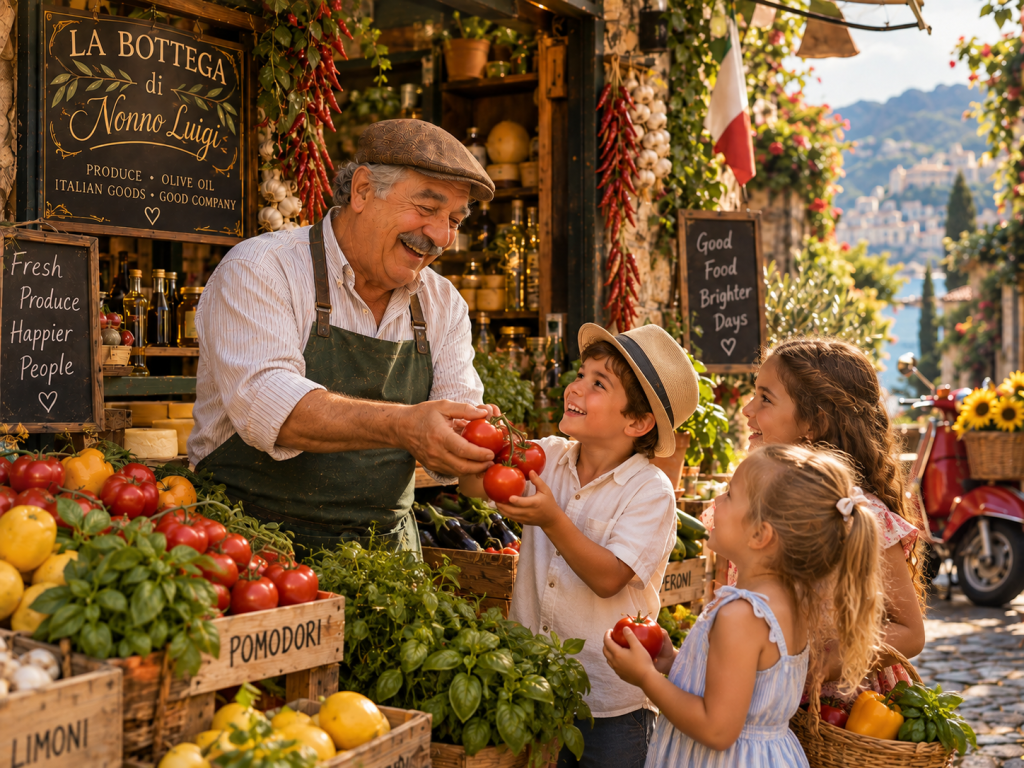
Children who once spent their pocket money on peaches now returned with grandchildren of their own.
Franco knew everyone personally, the young mother up the street who craved sweet tomatoes, the farmer who always added a few chocolates for his wife to his order, and the elderly widow needed someone to carry her groceries upstairs, which he did without ever waiting to be asked.
But Franco had once dreamed of becoming a painter.
As a young man, he studied at an art academy in Florence, certain his fingers would be stained with paints rather than fruit.
But when his father suffered a stroke, Franco came home just for a few months to help run the family market. A few months quietly became a lifetime.
He never regretted it.
He indulged the artist in his soul in little ways. Arranging figs until they looked like a still-life painting, selecting the perfect melon for a young couple celebrating an anniversary and in watching strangers arrive looking lost only to leave smiling.
He often said that every market was really a museum of ordinary miracles. Food brought people together. Directions changed lives. Kindness traveled farther than maps.
His wife, Isabella, had believed exactly the same thing. She had filled the little shop with laughter until cancer took her twelve years earlier.
Before she died, she made Franco promise one thing. Whenever you meet someone who looks like they need a little hope, give them something beautiful.
So when the two American women appeared, waving their hands, mixing English with heroic attempts at Italian, and laughing at themselves with complete abandon, Franco’s heart immediately softened. They reminded him of his own daughters when they were younger … fearless, curious, convinced that every wrong turn was simply another adventure waiting to happen. He understood only fragments of what they were asking.
He knew the place they sought. More importantly, he sensed they were searching for more than a destination. There was a light in their eyes that reminded him of pilgrims rather than tourists. As they thanked him, he reached instinctively for two apples … the finest in the crate.
Isabella would have approved.
Watching them disappear down the narrow street, he chuckled to himself. They’ll find what they’re looking for, he murmured in Italian.
Then, after a thoughtful pause, he added softly … though perhaps not what they expected.
He smiled, returned to arranging his peaches, and welcomed the next customer with the same warmth he had offered thousands before.
He never learned what became of the two cheerful women. But every autumn, when the first crop of crisp red apples arrived, he found himself wondering if somewhere in the world they still remembered the old fruit seller who had believed, without hesitation, that strangers deserved kindness. And that thought, more than anything, made the market feel a little less empty.